
Why I Don't Hate Rice
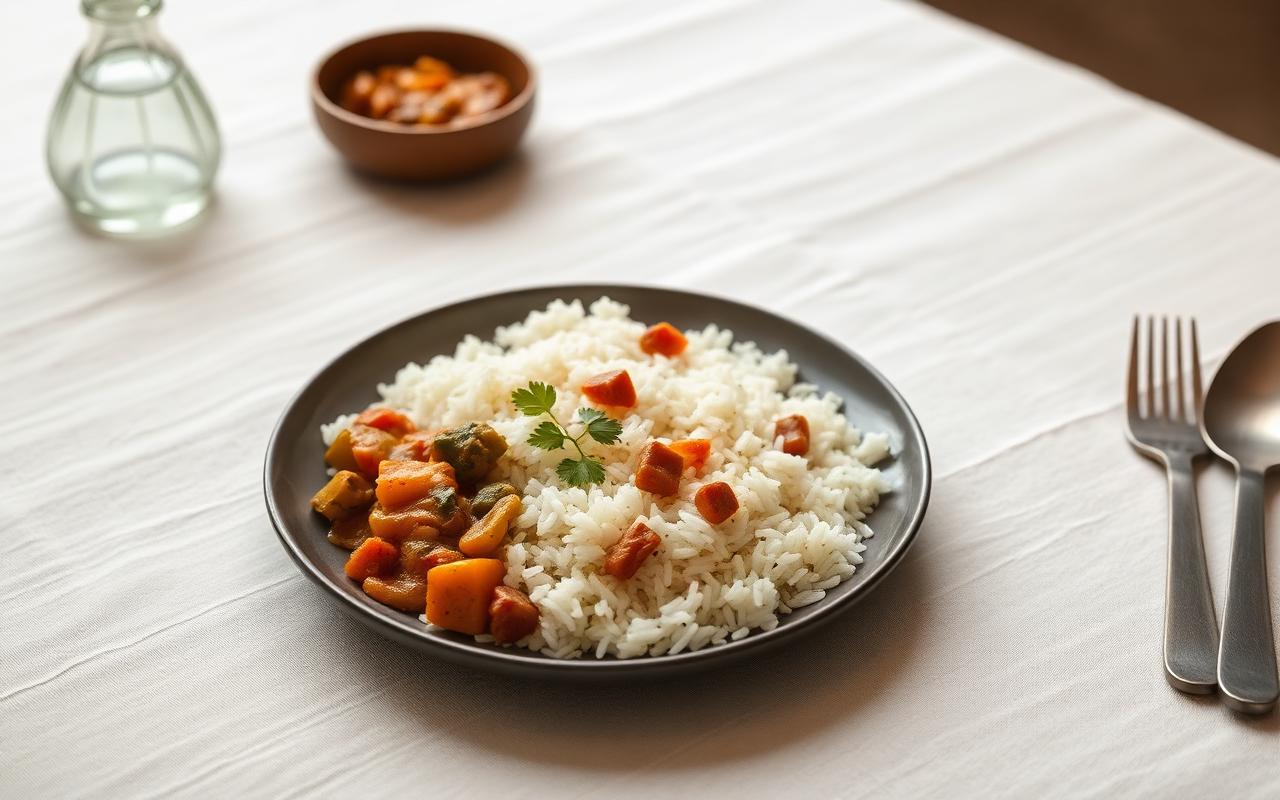
The problem isn't the rice on your plate. It's everything you've blamed on it.
A few months ago, I met someone who proudly told me, "Samiksha, I haven't eaten rice for six months." I smiled. "Wow! How much weight did you lose?" He looked away for a second. "Actually... not much." I wasn't surprised. Then I asked him a question. "So what did you eat instead?" He replied, "Three extra rotis." We both laughed.
Because somewhere along the way, rice had become the villain. The rotis somehow escaped the investigation.
Poor Rice. Always Blamed.
Whenever someone decides to lose weight, rice is usually the first thing to disappear from the plate. Birthday cake? Still there. Weekend pizza? That's okay. Late-night namkeen? "It's just a little." But the innocent bowl of rice? Banished.
It's almost as if rice wakes up every morning with one mission: "How can I make people gain weight today?" Spoiler alert. It doesn't.
Rice Didn't Change. Our Lifestyle Did.
Let's go back a generation. Our parents and grandparents ate rice. Our great-grandparents definitely ate rice. Many of them also walked everywhere. Worked physically demanding jobs. Sat on the floor. Carried groceries. Played outdoor games. They weren't burning calories in a gym. They were burning them living life.
Today, many of us sit for nine hours, drive everywhere, order food online and then blame rice for the weight we've slowly gained over the years. That's like blaming your pillow because you stayed up watching Netflix until 2 am.
What Does Science Say?
Rice is mainly a source of carbohydrates. Carbohydrates are your body's preferred source of energy, especially for your brain and during exercise. Rice is not "good" or "bad." It's food.
What matters more is: how much you're eating, what you're eating with it, how active you are, your overall calorie intake, and the quality of your diet over weeks and months.
Research consistently shows that weight loss happens when you maintain a calorie deficit over time, not because you removed one specific food. That's why two people can eat rice every day and have completely different body weights.
The Plate Matters More Than the Rice
Imagine these two lunches. Plate A: a huge mountain of rice, very little dal, almost no vegetables, and no meaningful protein. Plate B: one moderate serving of rice, a bowl of dal, chicken, fish, paneer or soy, plenty of vegetables, and curd on the side. Both meals contain rice. Only one is balanced. Rice isn't the difference. The plate is.
The Funny Part
If rice alone caused weight gain, every South Indian would be overweight. Clearly that's not how the human body works. And if one bowl of rice could erase an entire week of healthy habits, nutrition would be much scarier than it actually is.
Should You Ever Reduce Rice?
Sometimes, yes. If your portions are much larger than your body needs, reducing them can help. If you're eating multiple large servings without enough protein or vegetables, balancing the meal makes sense. But reducing isn't the same as fearing.
There's a big difference between saying, "I'll have a little less today," and saying, "I can never eat rice again." One builds a habit. The other builds frustration.
Research Referred
- 1.Institute of Medicine. (2005). Dietary Reference Intakes for Energy, Carbohydrate, Fiber, Fat, Fatty Acids, Cholesterol, Protein and Amino Acids.
- 2.Hall KD, Kahan S. (2018). Maintenance of Lost Weight and Long-Term Management of Obesity. Medical Clinics of North America.
- 3.Johnston BC, Kanters S, Bandayrel K, et al. (2014). Comparison of Weight Loss Among Named Diet Programs in Overweight and Obese Adults. JAMA.
- 4.Hu EA, Pan A, Malik V, Sun Q. (2012). White Rice Consumption and Risk of Type 2 Diabetes: Meta-analysis and Systematic Review. BMJ.
Questions? Ask Away –
Reading is a great first step. Applying it consistently is where most people struggle. If you'd like personal guidance, send me a WhatsApp message and let's see if ONYOMARK coaching is the right fit for you.
Chat on WhatsAppYou Might Also Like