
The Complete Fitness Guide for Busy Indian Working Couples
Who Is This Guide For?
This guide is for you if:
- Both you and your partner have full-time jobs.
- You've been thinking about getting fit "from next Monday."
- You've joined a gym before but stopped after a few weeks.
- You want practical advice that actually fits your schedule.
- You want to become healthier without making fitness your entire life.
What You'll Learn
By the time you finish reading this guide you'll know:
- Why fitness becomes harder after you start working.
- Why motivation isn't your biggest problem.
- How couples can use each other to stay consistent.
- Whether strength training or cardio should be your priority.
- A realistic weekly workout plan.
- Simple nutrition habits that don't involve eating boiled chicken every day.
- The biggest mistakes beginners make and how to avoid them.
Let's Be Honest
It's 8:30 PM.
You and your partner finally get home.
One of you has been stuck in traffic for over an hour.
The other has spent the entire day jumping from one meeting to another.
The gym bag is sitting in the corner.
Nobody says anything for a few minutes.
Then one of you asks, "Gym?"
The other smiles and says, "Let's skip today. We'll definitely go tomorrow."
Tomorrow becomes Friday. Friday becomes next Monday. And somehow three months pass without either of you realizing it.
If you've ever been in this situation let me tell you something.
You're not lazy. You're not weak. And you definitely don't lack motivation.
You're simply trying to fit healthy habits into a life that's already full.
That's where most fitness advice gets it wrong. It tells you to wake up at 5 AM. Meal prep for four hours every Sunday. Train six days a week. Track every calorie. Drink three protein shakes. Walk 15,000 steps. Sleep eight hours. Meditate. Journal. Read ten pages. And somehow still have a social life.
Let's be realistic. Most working couples don't have that kind of time.
You don't need another perfect fitness plan. You need one that still works after a late office meeting. After a family function. After a stressful Tuesday. After ordering pizza on Friday night.
Because that's what real life looks like. Fitness should fit into your life. Your life shouldn't have to fit around fitness.
Why Staying Fit Feels So Difficult After You Start Working
Think back to college. You probably had more energy. More free time. You could randomly decide to play cricket for two hours or hit the gym in the evening.
Then work happened. Now your day looks something like this: wake up, get ready, travel, sit, meetings, emails, calls, lunch at your desk, more meetings, travel back home, dinner, sleep, repeat.
The funny thing is that many of us aren't physically tired. We're mentally tired. And those two feel surprisingly similar.
By the time you reach home your brain has already made hundreds of decisions. What to wear. Which email to reply to. How to solve a problem at work. What to cook. Whether to order food. Who to call.
When your brain has been making decisions all day it naturally starts looking for the easiest option. That's why the couch suddenly looks more attractive than the treadmill.
This isn't a lack of discipline. It's just how human beings work.
On top of that most office jobs involve sitting for long hours. Our bodies were designed to move. Instead we're sitting in front of a laptop. Then sitting in traffic. Then sitting on the sofa.
Even if you go to the gym for one hour your body still spends most of the day inactive. That's why regular movement matters just as much as your workouts.
The good news? You don't have to become a fitness enthusiast to improve your health. According to the World Health Organization, adults should aim for 150 to 300 minutes of moderate physical activity every week along with muscle-strengthening activities at least two days every week.
Read that again. It doesn't say you need to exercise every single day. It doesn't say you need six-pack abs. It doesn't even say you have to spend two hours in the gym. It simply asks you to move regularly. That's a goal almost everyone can achieve with a little planning.
Motivation Is Overrated
Let's talk about motivation for a minute. People love saying, "I just need more motivation." I don't think that's true.
Think about brushing your teeth. Do you feel motivated every night? Probably not. You just do it. Why? Because it's become part of your routine. That's exactly how exercise should feel. Not exciting every day. Just normal.
Here's something I've noticed while coaching. People who stay fit for years aren't always the most motivated. They're usually the most organised.
Their gym clothes are already packed. They know exactly which days they're training. Dinner is planned. Their workout starts at the same time every week. They've removed as many excuses as possible.
Research on long-term exercise habits supports this idea. People who build supportive routines and environments are much more likely to stay physically active than people who rely only on motivation.
So instead of asking, "How do I stay motivated?" ask, "How do I make exercising easier?" Those are two completely different questions. One depends on emotion. The other depends on planning. Planning wins almost every time.
Why Couples Secretly Have an Advantage
This is probably my favourite part of coaching couples. People assume they have to do everything together. Same exercises. Same weights. Same fitness level. Not at all.
In fact most couples I meet are completely different. One partner has been going to the gym for years. The other is nervous about stepping inside one. One loves strength training. The other prefers walking. That's perfectly normal.
The real advantage isn't exercising together. The real advantage is living together.
You already influence each other's habits every single day. If one person orders healthy food the other usually does too. If one person suggests an evening walk the other often joins. If both of you have decided that Tuesday and Friday are gym days you're much less likely to skip because someone else is counting on you.
That's accountability. Not the kind where someone shouts at you. The kind where your partner simply says, "Come on. Let's just go for 45 minutes and come back." Sometimes that's all the motivation you'll ever need.
Fitness becomes less about forcing yourself. And more about building a lifestyle together. That's why I believe couples have one of the biggest advantages in long-term health. Not because they have more time. But because they don't have to do it alone.
What Should Your Goal Actually Be?
When most couples decide to get fit the first thing they talk about is weight. "I want to lose 8 kilos." "I want to fit into my old clothes." "I want to get rid of this belly."
There's nothing wrong with wanting to lose weight. But here's something I'd like you to think about.
Imagine two couples. The first couple loses 10 kilos in four months. Then they stop exercising. Six months later they're back where they started. The second couple only loses 4 kilos. But they continue strength training twice a week for the next five years. Who do you think is healthier?
Exactly. Weight is an outcome. Habits are the real goal.
Instead of asking, "How much weight can we lose?" try asking, "Can we become stronger than we were three months ago? Can we climb four flights of stairs without getting breathless? Can we wake up feeling fresh instead of tired? Can we still be active in our 50s and 60s?"
Those are goals worth chasing. Because unlike a number on the weighing scale they keep improving throughout your life.
Strength Training or Cardio?
This question comes up in almost every consultation. "Should we do cardio first?" "Should we only walk?" "Is lifting weights necessary?"
Here's my answer. Do both. But if your schedule only allows you three workouts every week I'd put strength training first.
Why? Because strength training gives you something that cardio alone cannot. It helps you build and maintain muscle. That matters more than most people realise.
Muscle isn't just for looking athletic. It helps you carry groceries, lift luggage, play with your children, get up from the floor easily, protect your joints, support healthy ageing, improve insulin sensitivity and increase bone strength.
Research consistently shows that resistance training improves muscle strength, physical function and several important health markers across different age groups.
Now before the runners get angry — cardio is still incredibly important. Walking. Cycling. Swimming. Jogging. Playing badminton. Anything that gets your heart working is good for you.
The goal isn't to choose between strength and cardio. The goal is to include both over the course of your week. Think of strength training as building the car. Think of cardio as taking it out for a drive. You need both.
A Weekly Plan That Actually Fits Busy Lives
Most beginners make one mistake. They copy the workout split of someone who's been training for ten years. You don't need separate chest day, arm day, shoulder day, leg day. Not yet.
Here's a much simpler approach.
| Day | What to do |
|---|---|
| Monday | Full body strength training |
| Tuesday | 30–40 minute walk after work |
| Wednesday | Full body strength training |
| Thursday | Rest or a relaxed walk |
| Friday | Full body strength training |
| Saturday | An activity you both enjoy — badminton, swimming, cycling, a long walk |
| Sunday | Rest. Spend time together. Prepare for the week ahead. |
That's enough. Seriously. You don't need to spend ten hours every week in the gym to become healthier.
Free Resource — Busy Couple Weekly Planner (PDF)The weekly plan above on one printable page. Stick it on the fridge.Healthy Eating Doesn't Need To Be Complicated
Social media has made nutrition look incredibly confusing. Should you stop eating rice? Is ghee healthy? Do you need protein powder? Should you avoid eating after 7 PM? Take a deep breath. Let's simplify it.
Eat protein with every main meal
Eggs, milk, curd, paneer, chicken, fish, dal, rajma, chole, soya, tofu — whatever suits your preferences. Protein helps maintain muscle and also keeps you feeling full for longer.
Eat more fruits and vegetables
Not because they're magical. Because most people simply don't eat enough of them.
Drink enough water
Carry a bottle to work. You'll probably drink more than you think.
Stop trying to eat perfectly
Birthday parties happen. Festivals happen. Vacations happen. Weekend dinners happen. That's life. One meal won't make you unhealthy. Just like one salad won't make you healthy. It's what you do most of the time that matters.
Free Resource — Don't Lose Your Mind Over Protein (PDF)A one-page protein chart of everyday Indian foods. More free downloads at /knowledge/resources.Seven Mistakes Almost Every Beginner Makes
I've seen every one of these. More than once.
- Starting too aggressively. Five workouts in week one. Zero workouts in week three. Start slower than you think you should.
- Ignoring technique. Good movement is always more valuable than heavy weights. Your joints will thank you years later.
- Chasing soreness. Being sore doesn't mean you had a better workout. Progress means becoming stronger over time.
- Comparing yourself with influencers. You're comparing your Day One with someone else's Year Ten. That's never a fair comparison.
- Skipping sleep. Recovery is part of training. Muscles adapt while you recover, not while you're lifting.
- Looking for shortcuts. Fat burners, detox drinks, waist trainers — none of them replace consistent habits.
- Giving up after one bad week. You'll miss workouts. Everyone does. The important thing is coming back. Don't let one missed session become one missed month.
Your First 30 Days
Forget the next twelve months. Let's just focus on the next four weeks.
| Week | Focus |
|---|---|
| Week 1 | Show up. Learn. Don't worry about lifting heavy. |
| Week 2 | Start feeling more comfortable. Learn the exercises properly. |
| Week 3 | Notice the small wins — better sleep, more energy, less hesitation. |
| Week 4 | Celebrate consistency. Not weight loss. Not inches. The fact that you've kept showing up. |
That's the habit we're trying to build.
Do You Need A Coach?
Honestly? Not everyone does. There are fantastic free resources available today. But sometimes information isn't the problem. Direction is.
If you've been watching YouTube videos for months and still don't know where to begin, if you're worried about your exercise technique, if you're tired of starting over every few months — having someone guide you can remove a lot of confusion.
A coach isn't there to magically motivate you. A good coach helps you stay focused on what actually matters. Less guesswork. More progress.
That's the philosophy behind ONYOMARK. Simple coaching. Clear direction. No unnecessary complications.
Quick Summary
If you've forgotten everything else remember these points.
- Fitness should fit your lifestyle.
- Strength training should be part of every adult's routine.
- Cardio is important but it doesn't replace strength training.
- Motivation comes and goes. Systems stay.
- Couples already influence each other's habits. Use that advantage.
- Healthy eating doesn't have to be perfect.
- Small improvements repeated every week create big results.
Moral of the Story
Most people don't fail because they chose the wrong workout. They fail because they keep waiting for the perfect time to start.
There is no perfect Monday. No perfect month. No perfect motivation. There is only today.
Start with what you have. Use the time you do have. Support each other. Be patient with yourselves.
One year from now you'll never regret the evenings you chose to invest in your health together.
Happy Moving! — Team ONYOMARK
FAQ
Common questions
- How many days a week should a busy working couple train?
- Three strength sessions a week is enough to see real change, with walks or light activity on the other days. It fits around late meetings, travel and family time far better than a six-day split.
- Should we do cardio or strength training first?
- If you can only pick one, choose strength training. It preserves muscle, protects joints and supports long-term health. Cardio is important too — walk, cycle or play a sport on your non-lifting days.
- Do we have to work out together as a couple?
- No. The real advantage of being a couple is shared routines and accountability, not identical workouts. You can train at different levels, on different days, and still support each other's consistency.
- How much protein do we actually need?
- Most active adults do well with roughly 1.2–1.6 g of protein per kg of body weight per day, spread across meals. Regular Indian foods — dal, curd, paneer, eggs, chicken, fish, soya — are more than enough for most people.
- How long until we see results?
- You'll usually feel better within 2–3 weeks (more energy, better sleep, less stiffness). Visible strength and body composition changes typically show up between 8–12 weeks of consistent training and reasonable eating.
Show research references (6)+
- [1]Bull FC, Al-Ansari SS, Biddle SJH, et al. (2020). World Health Organization 2020 guidelines on physical activity and sedentary behaviour. British Journal of Sports Medicine. doi:10.1136/bjsports-2020-102955
- [2]Rhodes RE, Fiala B. (2009). Building motivation and sustainability into the prescription and recommendations for physical activity and exercise therapy. Applied Physiology, Nutrition, and Metabolism. doi:10.1139/H09-118
- [3]Westcott WL. (2012). Resistance training is medicine: effects of strength training on health. Current Sports Medicine Reports. doi:10.1249/JSR.0b013e31825dabb8
- [4]Morton RW, Murphy KT, McKellar SR, et al. (2018). A systematic review, meta-analysis and meta-regression of the effect of protein supplementation on resistance training-induced gains in muscle mass and strength in healthy adults. British Journal of Sports Medicine. doi:10.1136/bjsports-2017-097608
- [5]American College of Sports Medicine (2021). ACSM's Guidelines for Exercise Testing and Prescription (11th Edition).
- [6]World Health Organization (2020). WHO Guidelines on Physical Activity and Sedentary Behaviour. Geneva: WHO.
Need personal guidance?
If you're ready to stop guessing and start making consistent progress, let's have a conversation.
No forms, no funnels. A quick WhatsApp exchange is enough to see if working together makes sense.
Get Set Go 🚀
You may also like
More from the Knowledge Hub
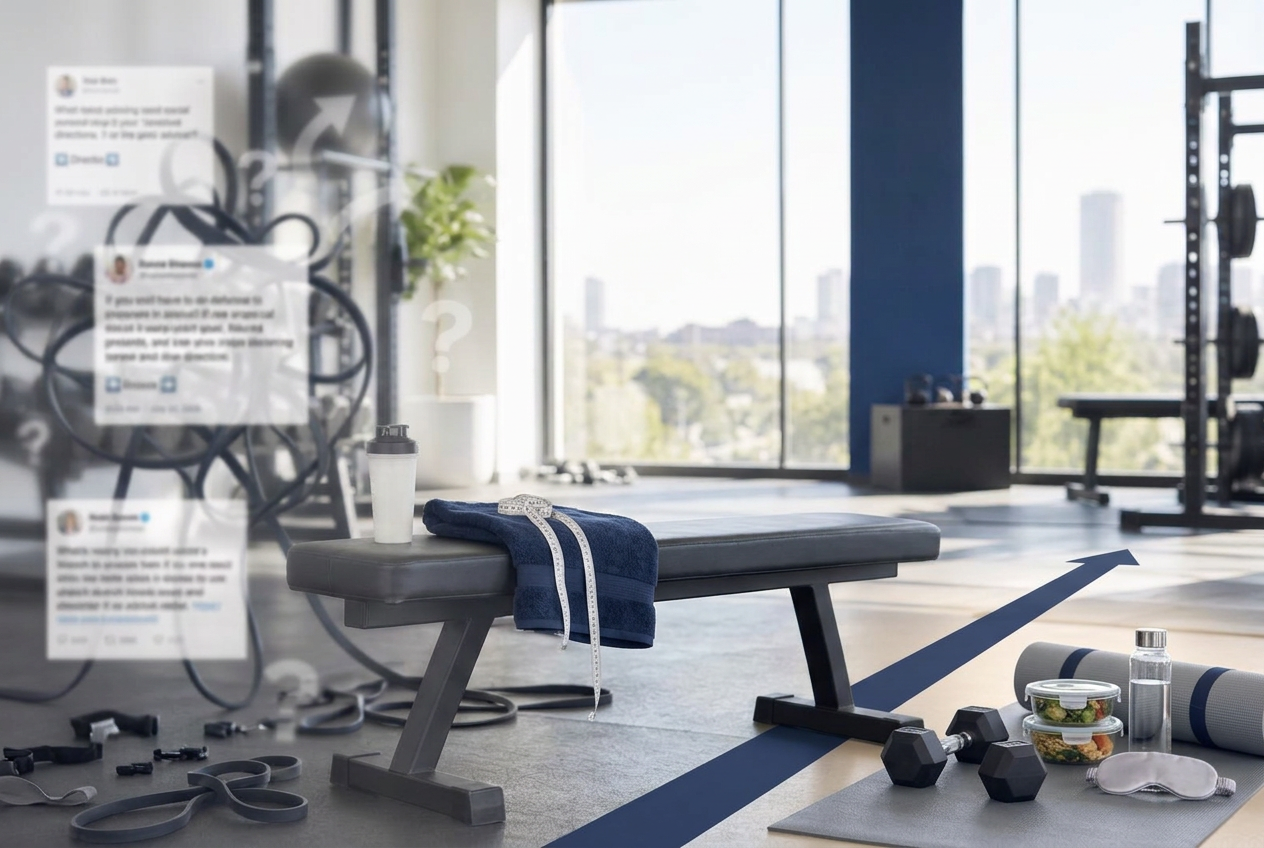
Myth Buster: 12 Fitness and Fat-Loss Claims, Explained
Do crunches burn belly fat? Does sweat mean fat loss? Can green tea melt fat? Coach Samiksha breaks down 12 popular fitness and nutrition myths without the hype.
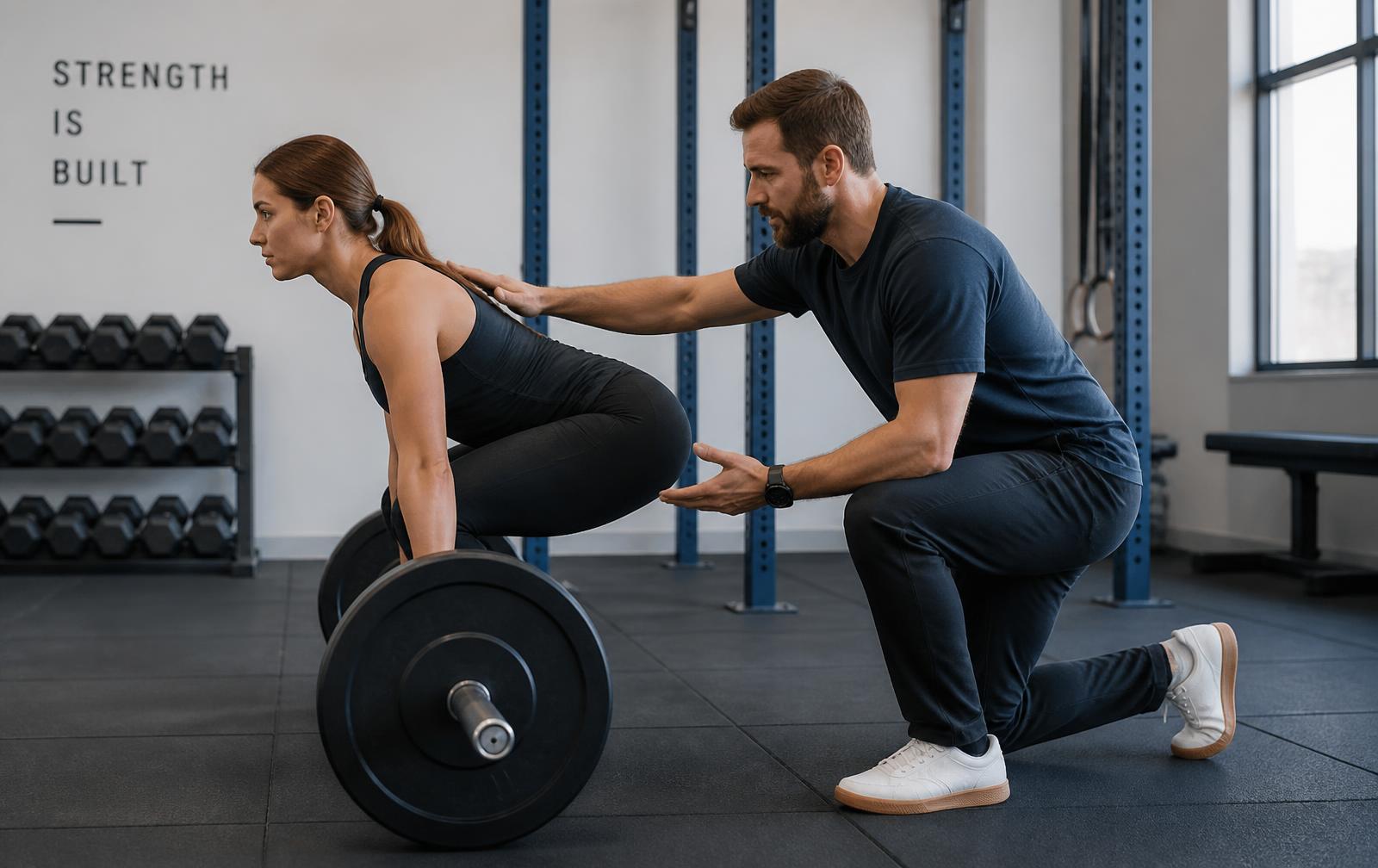
Move Better, Not Perfect: The Complete Guide to Exercise Technique
Why how you move matters more than how much you lift. An honest, evidence-based guide to exercise technique for beginners — without the fear, confusion or obsession with perfection.

The Complete Guide to Sleep
Why when you sleep matters almost as much as how long you sleep. A ten-part guide to circadian rhythm, sleep stages, naps, night shifts, fat loss and building a sleep routine you'll actually follow.