
5 Things to Fix Before You Touch a Calorie Tracker
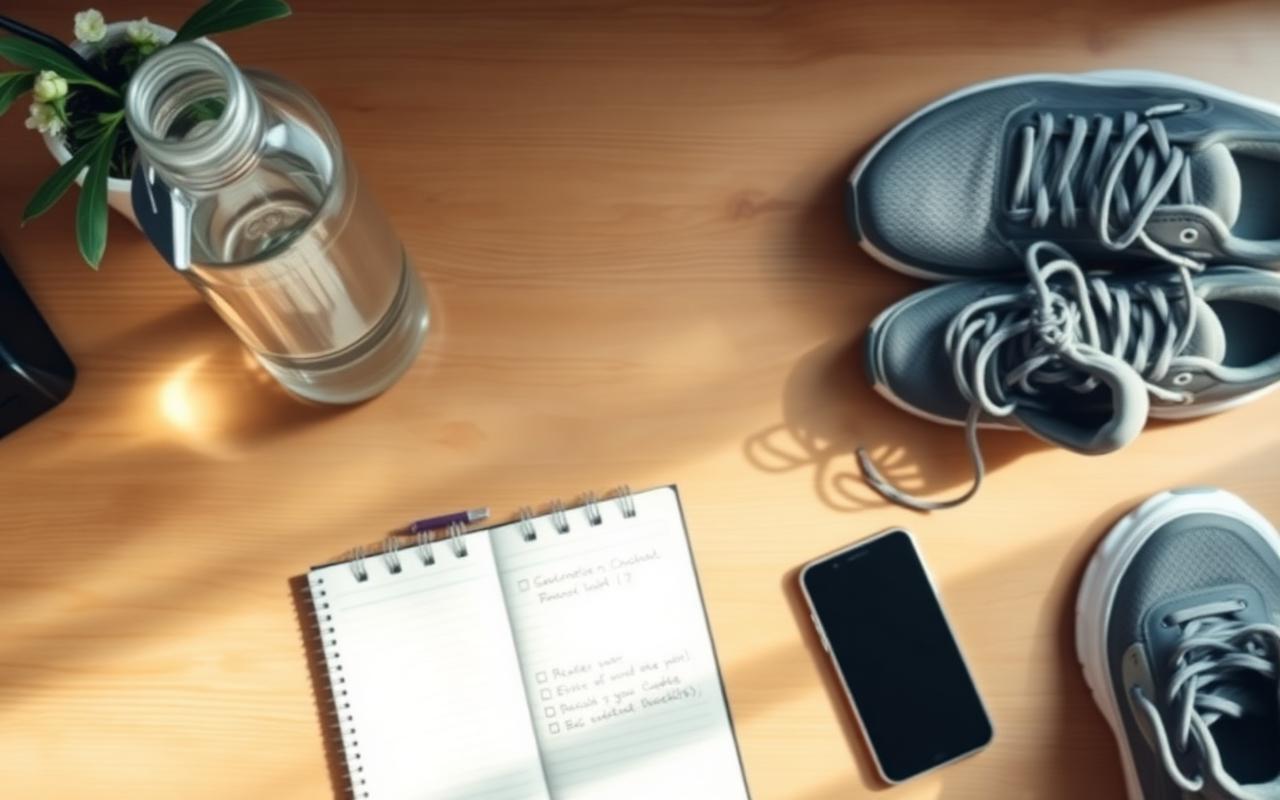
Before you start counting calories, check how you're sleeping.
A client once told me:
Samiksha, I think I need to start counting calories.
"Okay. How's your sleep?"
"Bad."
"How much water are you drinking?"
"Probably not enough."
"How much do you walk?"
"Not much."
"Do you move after meals?"
"No."
"And screen time?"
She looked at me.
"Are you secretly tracking me?"
No.
I just asked the questions that usually come before the calorie tracker.
Because if you're trying to lose weight, improve your fitness or build a healthier lifestyle, calories are only one part of the picture.
Let's fix the boring stuff first.
1. Sleep
If you're sleeping five hours, waking up exhausted and then trying to follow a strict calorie deficit, you're making the process harder.
Sleep has a complicated relationship with weight management. Poor or restricted sleep can affect appetite, food choices, energy and your ability to stick to healthy behaviours. Research is still evolving, so "sleep more and you'll automatically lose weight" is too simplistic. But sleep deserves attention when you're working on fat loss.
And honestly, think about yourself after a good night's sleep versus four hours.
Which version is more likely to exercise, cook properly and say no to the third office samosa?
Exactly.
Start simple: move your bedtime 20-30 minutes earlier rather than suddenly deciding you'll sleep at 10 pm every night.
2. Hydration
You don't need detox water.
You don't need lemon, mint and chia seeds floating around in a motivational bottle.
You need to drink water consistently.
Busy professionals often reach evening and realise they've had three cups of chai and almost no water.
Then they try to "catch up" by drinking a litre before bed.
Not ideal.
Keep water visible. Carry a bottle. Drink through the day and around your meals and exercise.
The goal isn't to win a hydration competition.
It's to make drinking water normal.
3. Morning Movement
I'm not asking you to become a 5 am person.
If you hate mornings, let's not make your fitness plan depend on becoming someone you aren't.
Just move.
Five to ten minutes of walking, mobility, stretching or basic bodyweight movements can be a simple way to start the day with activity.
And remember, physical activity isn't only what happens in a gym. Walking, climbing stairs and other everyday movement count too.
Especially if your workday involves eight hours in front of a laptop.
Your commute from bed to desk doesn't count.
Unfortunately.
4. Walk After Your Meals
This is one of my favourite habits because you don't have to find a completely new slot in your day.
You already have to eat.
So attach some movement to it.
Try 500-1,000 steps after a major meal when practical.
Walk around the office.
Walk with your partner after dinner.
Take a phone call while walking.
Do a few rounds around your building.
The number isn't magic. The habit is the point.
Research supports post-meal movement for reducing the rise in blood glucose after eating and suggests that exercising relatively soon after a meal can be particularly useful.
And if you walk after three meals, you've created three movement opportunities without scheduling three workouts.
That's much more realistic for a busy person.
5. Look at Your Screen Time
This one gets uncomfortable.
You might exercise for 45 minutes and then sit for the rest of the day.
Drive to work.
Sit at work.
Drive home.
Sit for dinner.
Sit on the sofa.
Scroll until midnight.
Then wonder why you're tired the next morning.
Your phone isn't making you gain weight by itself. But excessive recreational screen time can replace movement and late-night screen use can also push your bedtime later.
And now our five habits start connecting.
Less sleep.
Less energy.
Less movement.
More sitting.
More scrolling.
Then we try to solve the entire situation with a calorie calculator.
That's a lot of responsibility to put on one little app.
Does This Mean You Should Never Count Calories?
Not at all.
Calorie tracking can be useful for some people. It can create awareness and help some people understand portions and overall intake.
But it isn't compulsory for everyone.
Weight loss ultimately involves an energy deficit, but getting there doesn't have to begin with weighing every grain of rice.
Sometimes the first step is simply creating a lifestyle that makes healthier eating and movement easier.
Try This for One Week
Don't start all five habits tomorrow.
Pick one.
Maybe:
- Sleep 20 minutes earlier.
- Carry a water bottle to work.
- Move for 5-10 minutes in the morning.
- Walk 500-1,000 steps after dinner.
- Keep your phone away for 30 minutes before bed.
Do it for a week.
Then build from there.
Because the goal isn't to create the perfect weight loss plan.
It's to create a routine you can still follow when work gets crazy, your kid is sick, your flight is delayed or your Monday has gone completely sideways.
The Funny Part
We sometimes spend 45 minutes researching the perfect calorie deficit...
while sitting on the sofa eating biscuits.
At some point, the calculator needs a little help from our legs.
Moral of the Story
Calories matter.
But they're not the only thing that matters.
Before you start counting every almond, look at the basics:
Sleep. Hydration. Movement. Post-meal walks. Screen time.
Fix one.
Repeat it.
Then add another.
You don't need a completely new life to start losing weight.
You need a few better habits that eventually become your normal life.
Happy Moving!
Samiksha
Founder, ONYOMARK
Research Referred
- 1.Duan L, Berryhill J, Dai N, Sica G, Chaput JP (2026). Sleep and Its Impact on the Success of Weight Loss Interventions in Adults With Excess Weight: A Systematic Review. Obesity Reviews.
- 2.U.S. Department of Health and Human Services (2018). Physical Activity Guidelines for Americans, 2nd Edition.
- 3.Engeroff T, Groneberg DA, Wilke J (2023). After Dinner Rest a While, After Supper Walk a Mile? A Systematic Review with Meta-analysis of the Impact of Post-meal Walking on Glycemic Responses. Sports Medicine.
Questions? Ask Away –
Reading is a great first step. Applying it consistently is where most people struggle. If you'd like personal guidance, send me a WhatsApp message and let's see if ONYOMARK coaching is the right fit for you.
Chat on WhatsAppYou Might Also Like