
Pain During Exercise: When Is It Normal and When Should You See a Physiotherapist?
Who Is This Guide For?
This guide is for you if:
- You recently started exercising and something feels different.
- You're unsure whether your soreness is normal.
- You've been told to "push through the pain" and aren't sure if that's good advice.
- You've stopped exercising because you're afraid of making an injury worse.
- You want to understand when a coach can help and when a physiotherapist is the better person to see.
What You'll Learn
By the end of this guide you'll understand:
- The difference between exercise discomfort, muscle soreness and pain.
- Why pain isn't always a sign of serious damage.
- When it's reasonable to keep moving and when it's better to seek assessment.
- How coaches and physiotherapists work together.
- Why early guidance often leads to better outcomes than guessing.
Let's Be Honest
Pain is confusing.
Two people can do the exact same workout.
The next morning one person feels pleasantly sore.
The other wakes up convinced they've injured themselves.
Who's right?
Maybe both.
Maybe neither.
The problem is that we've grown up hearing two completely opposite messages.
One says, "No pain, no gain."
The other says, "If anything hurts, stop immediately."
Real life is somewhere in the middle.
Your body is constantly sending you information. Some of it simply means, "That was a new challenge." Some of it means, "Let's take a closer look at this." Learning the difference is one of the most valuable skills you can develop if you want to stay active for years.
One of the saddest things I see isn't people getting injured. It's people becoming afraid of movement.
Someone tweaks their back while picking up a bag. Now they're scared to bend. Someone feels discomfort during a squat. Now they avoid squats forever. Someone reads an MRI report with unfamiliar medical words. Now they believe their back is permanently damaged.
Fear can become heavier than the injury itself.
And unfortunately, the internet often makes that fear worse.
You search one symptom. Within minutes you're reading about the worst possible conditions. You watch five reels. Each one gives a different explanation. One person says stretch. Another says strengthen. A third says never squat again. No wonder people feel overwhelmed.
That's why I wanted to write this article. Not to diagnose you. Not to replace a physiotherapist. Simply to help you understand pain a little better. Because understanding reduces fear. And less fear often makes it easier to make good decisions.
Why Pain Isn't Always What We Think It Is
When people hear the word pain, they often imagine damage. Something must have torn. Something must have slipped. Something must be broken.
Sometimes that's true.
Many times it isn't.
Pain is produced by your nervous system as a protective signal. That signal is influenced by many factors, including physical stress, previous experiences, sleep, stress levels, emotions and overall health. In other words, pain is real, but it isn't always a direct measure of how much tissue damage exists.
Think about a paper cut. It can sting far more than a bruise that's actually much larger.
Or think about the soreness after your first gym session. Your legs may feel stiff enough to make sitting down funny for two days. That doesn't mean you've damaged your muscles beyond repair. Your body is adapting to something new.
On the other hand, some serious injuries don't hurt as much as people expect in the beginning. That's why pain should never be judged by intensity alone.
Context matters. How it started. What makes it better. What makes it worse. How long it's been there. Whether it's improving. Whether it's affecting your daily life.
That's exactly why healthcare professionals ask so many questions before reaching conclusions. Pain is a puzzle. Not a single piece.
The Goal Isn't to Avoid All Pain
This might sound surprising.
The goal of exercise isn't to make sure you never feel discomfort. If your muscles are working hard, you'll often notice effort. You'll breathe faster. Your muscles may burn during a challenging set. You may even feel sore a day later.
Those experiences are usually part of training.
The goal is to understand which sensations are expected and which deserve further attention. Once you understand that difference, exercise becomes much less frightening. And that's exactly what I want for every reader of ONYOMARK. Not fear. Confidence.
Muscle Soreness, Discomfort and Pain: They're Not the Same Thing
One of the biggest mistakes people make is using the word pain for every uncomfortable feeling after exercise.
"My legs are hurting." "My shoulders are hurting." "My back is hurting."
Sometimes they're describing normal muscle soreness. Sometimes they're describing fatigue. Sometimes they're describing actual pain. Those are not the same thing.
Let's separate them.
1. Normal Exercise Effort
This is what you feel during a workout. Your breathing becomes faster. Your muscles feel tired. The last few repetitions are challenging. You might feel a burning sensation in the muscles you're working.
That's your body responding to effort. Once the set is over and you've had a little rest, that feeling usually settles down. This is a normal part of training.
2. Muscle Soreness
Have you ever started a new workout and then struggled to sit on the toilet the next morning? Welcome to muscle soreness.
Delayed Onset Muscle Soreness, often called DOMS, usually appears several hours after exercise and may peak around one or two days later. It often happens when you've tried a new exercise, increased your training volume or returned after a long break. [1]
Your muscles may feel stiff, tender when you press them, tired, or uncomfortable when moving. The important thing is this. Although soreness can feel dramatic, it usually improves gradually over the next few days.
Gentle movement often helps. A short walk. Light cycling. Easy mobility work. Good sleep. Enough protein. Hydration. Your body is adapting. Not falling apart.
3. Pain
Pain deserves a different conversation.
Pain might feel sharp, stabbing, catching, sudden, or like something simply isn't right. It may cause you to change the way you walk. Avoid certain movements. Stop your workout completely. Wake you up at night. Or continue getting worse instead of gradually improving.
Those situations deserve more attention. Does that automatically mean you've suffered a serious injury? No. But it does mean it's worth finding out why it's happening instead of guessing. That's where a physiotherapist becomes incredibly valuable.
A Simple Rule I Share With Clients
I don't ask, "Does it hurt?" I ask, "What happens if you keep going?"
If discomfort stays the same or eases as you warm up, that gives us one piece of information. If every repetition makes the pain noticeably worse or changes how you move, that's a different story.
Context matters far more than one word.
Why Self-Diagnosis Can Become a Trap
Let's say your shoulder hurts during a workout.
You open YouTube. One person says it's a rotator cuff tear. Another says it's shoulder impingement. Someone else says your posture is the problem. Then someone comments, "Mine was a labral tear." Within fifteen minutes you've diagnosed yourself with four different conditions.
The problem? None of those people have actually assessed you. They haven't watched you move. They haven't asked questions. They haven't tested your strength or range of motion. They're trying to solve a puzzle while only looking at one piece.
Even MRI reports can create unnecessary fear when they're read without proper explanation. Many people have findings like disc bulges or tendon changes on scans without having any pain at all. [2] Likewise, someone with very little visible change on a scan may experience significant symptoms.
That's why imaging is just one part of the picture. Your story matters. Your movement matters. Your goals matter. That's exactly why assessment is so important.
What Does a Physiotherapist Actually Do?
A lot of people think physiotherapists simply give stretches. That's a tiny part of what they do.
A good physiotherapist is trained to understand how your body moves and why your symptoms may be happening. Depending on your situation they may:
- Ask detailed questions about your symptoms.
- Assess your movement.
- Measure strength and mobility.
- Identify factors contributing to your pain.
- Guide your rehabilitation.
- Help you return to work, sport or the gym.
- Communicate with other healthcare professionals when needed.
Most importantly, they help you make sense of what's happening. And when pain is confusing, understanding is often the first step towards confidence.
Coaches and Physiotherapists Are Teammates
One of the biggest myths in the fitness industry is that coaches and physiotherapists do the same job. We don't. And that's a good thing.
As a coach, my role is to help you build strength, improve fitness, learn exercises, create sustainable habits and move with confidence.
A physiotherapist's role is different. They're trained to assess pain, guide rehabilitation and help you recover from injuries or conditions affecting movement.
These roles often overlap, but they are not interchangeable. Some of my favourite client journeys have looked like this: A client develops persistent shoulder pain. They see a trusted physiotherapist. The pain settles. They gradually return to strength training. Then we work together to rebuild confidence and capacity. Nobody loses. The client wins.
That's exactly how healthcare should work.
When Should You See a Physiotherapist?
One of the questions I get asked most often is, "Should I just wait for it to get better?" Sometimes, yes. Sometimes, no. That's why it's impossible to give one answer that fits everyone.
Instead of trying to diagnose yourself online, it helps to recognise situations where getting assessed sooner is usually the smarter choice.
Consider booking an appointment with a qualified physiotherapist if:
- Your pain has lasted for more than a week or two without any meaningful improvement.
- The pain is becoming worse instead of gradually settling.
- You're changing the way you walk, lift or move because of the pain.
- The same exercise hurts every single time you perform it.
- You feel unstable or like a joint is "giving way."
- Pain is stopping you from working, sleeping or enjoying daily life.
- You're recovering from an injury and want guidance before returning to exercise.
Getting assessed doesn't always mean you'll be told to stop exercising. In fact, many people are encouraged to keep moving in ways that suit their condition. The goal of a good assessment isn't to scare you. It's to give you clarity.
Some Symptoms Should Never Be Ignored
Although many aches and pains related to exercise improve with time and appropriate guidance, some symptoms deserve urgent medical attention.
Seek immediate medical care if you experience:
- A major fall, accident or traumatic injury.
- A suspected fracture or joint dislocation.
- Sudden loss of strength in an arm or leg.
- Numbness that is getting worse or spreading.
- Changes in bladder or bowel control.
- Fever, unexplained weight loss or severe night pain along with back pain.
- Pain that is severe, rapidly worsening or accompanied by other concerning symptoms.
These situations are uncommon, but they are important. When in doubt, get assessed. It's always better to ask an expert than to rely on guesswork.
Finding the Right Physiotherapist Matters
Just like choosing a coach, finding the right physiotherapist isn't only about qualifications. It's also about communication.
You deserve someone who listens. Someone who explains. Someone who encourages you to understand your condition instead of becoming afraid of it.
When looking for a physiotherapist, consider asking yourself:
- Do they take time to understand my story?
- Do they assess how I move rather than focusing only on one painful area?
- Do they explain things in a way I can understand?
- Do they involve me in the plan instead of simply telling me what to do?
- Do I leave the appointment feeling more confident than when I arrived?
The right clinician won't promise overnight miracles. They'll help you understand the process, set realistic expectations and guide you through recovery one step at a time.
Professionals I Trust
One of the values that ONYOMARK is built on is knowing where coaching ends. I love helping people become stronger. But if I genuinely believe someone would benefit from seeing a physiotherapist first, that's exactly what I'll recommend.
Because your health comes before any coaching session.
That's why I've created Professionals I Trust. This isn't a paid directory. Nobody can buy a place on this list. Every physiotherapist featured here is someone I've either worked with, learned from or would feel comfortable recommending to my own family and friends.
Whether you're dealing with shoulder pain, knee pain, back pain or recovering from an injury, I hope this growing network helps you find the right person a little faster. Because the right advice at the right time can save months of frustration.
Think About This
Imagine two people with the same shoulder pain.
The first spends six months watching random videos online. Trying new stretches every week. Changing exercises every few days. Never really understanding what's happening.
The second books an appointment with a qualified physiotherapist. Gets assessed. Understands the problem. Follows a structured plan. Gradually returns to training with confidence.
Who do you think is more likely to enjoy exercise again?
Knowledge doesn't just reduce pain. It often reduces fear. And fear is one of the biggest reasons people stop moving altogether.
Free Resources — printable guides, planners and cheat sheetsBrowse every free ONYOMARK download in one place.Moral of the Story
Movement is one of the best gifts you can give your body. But movement doesn't mean ignoring pain. It doesn't mean proving how tough you are. And it certainly doesn't mean trying to diagnose yourself from a 30-second video online.
Some days your body simply needs time. Some days it needs a small adjustment. And sometimes, it needs the right professional to guide you.
There's no shame in that. In fact, knowing when to ask for help is one of the smartest decisions you can make.
At ONYOMARK, my goal has never been to have all the answers. My goal is to help you find the right answers. Sometimes that answer comes from a coach. Sometimes it comes from a physiotherapist. What matters most is that you keep moving safely, confidently and with the support you deserve.
FAQ
Common questions
- Should I stop exercising if I feel pain?
- Not always. If the sensation is mild muscle effort or normal soreness that eases with movement, you can usually continue with appropriate adjustments. If the pain is sharp, worsening, changing how you move or persisting beyond a few days, stop and get assessed.
- How can I tell soreness apart from an injury?
- Normal muscle soreness (DOMS) is usually dull, tender and improves over a few days. Injury-related pain is often sharper, more localised, may change how you move and can get worse with repeated loading rather than better.
- Can my coach diagnose my pain?
- A coach can help you modify exercises, improve technique and build strength, but diagnosing pain is outside a coach's scope. If your symptoms are persistent or concerning, see a qualified physiotherapist or healthcare professional.
- When is a physiotherapist better than a coach?
- A physiotherapist is the right first stop when pain is persistent, worsening, affecting daily life or follows an injury. Once the pain has settled and you've been cleared, a coach can help you rebuild strength and confidence.
- Is an MRI always needed to know what's wrong?
- Not always. Imaging can be useful in specific cases, but many common aches can be assessed through a thorough clinical examination. Sometimes imaging findings are present even in people without pain, so scans should be interpreted alongside your full story.
Show research references (7)+
- [1]Cheung K, Hume P, Maxwell L. (2003). Delayed onset muscle soreness: Treatment strategies and performance factors. Sports Medicine.
- [2]Brinjikji W, Luetmer PH, Comstock B, et al. (2015). Systematic Literature Review of Imaging Features of Spinal Degeneration in Asymptomatic Populations. American Journal of Neuroradiology.
- [3]International Association for the Study of Pain (IASP) (2020). IASP Terminology and Definition of Pain.
- [4]World Health Organization (2020). WHO Guidelines on Physical Activity and Sedentary Behaviour. Geneva: WHO.
- [5]National Institute for Health and Care Excellence (NICE) (2020). Clinical guidelines on low back pain, osteoarthritis and musculoskeletal assessment.
- [6]Foster NE, Anema JR, Cherkin D, et al. (2018). Prevention and treatment of low back pain: evidence, challenges and promising directions. The Lancet.
- [7]O'Sullivan P, Caneiro JP, O'Keeffe M, et al. (2022). Contemporary evidence-based management of musculoskeletal pain and rehabilitation.
Need personal guidance?
If you're ready to stop guessing and start making consistent progress, let's have a conversation.
No forms, no funnels. A quick WhatsApp exchange is enough to see if working together makes sense.
Get Set Go 🚀
You may also like
More from the Knowledge Hub
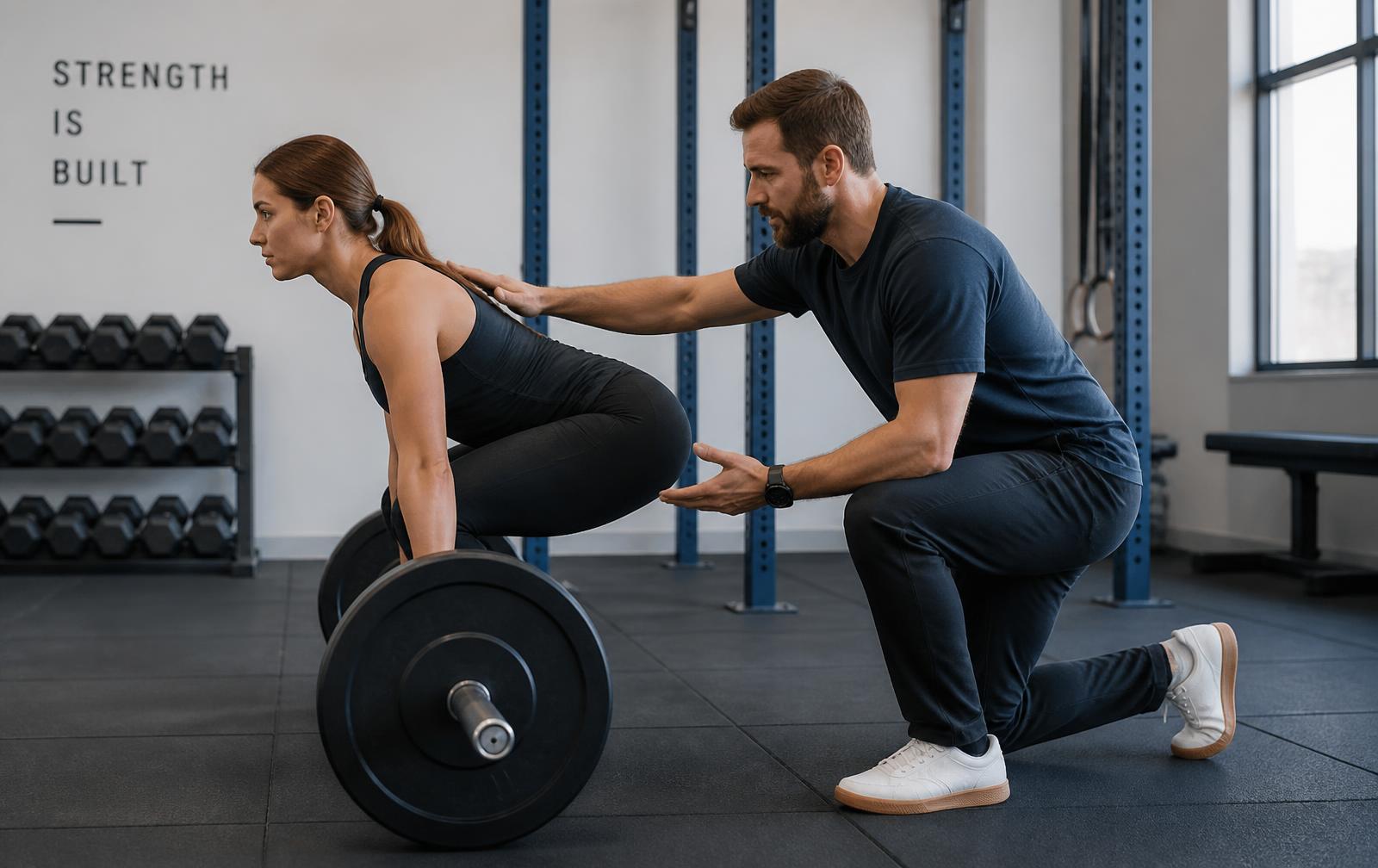
Move Better, Not Perfect: The Complete Guide to Exercise Technique
Why how you move matters more than how much you lift. An honest, evidence-based guide to exercise technique for beginners — without the fear, confusion or obsession with perfection.

The Complete Beginner's Guide to Strength Training for Women
Strength isn't just about muscles — it's about living life with confidence. An honest, evidence-based beginner's guide to strength training for women, without myths, gimmicks or gym intimidation.

Myth Buster: 12 Fitness and Fat-Loss Claims, Explained
Do crunches burn belly fat? Does sweat mean fat loss? Can green tea melt fat? Coach Samiksha breaks down 12 popular fitness and nutrition myths without the hype.